About Piston Agricultural Aircraft
The agricultural aviation industry marked its 100th anniversary in 2021, and piston agricultural aircraft continue, as they have for decades, to help growers spray and seed their fields quickly and economically. These airplane workhorses can also help out with soil and field analysis, crop monitoring, and herding, making them invaluable whether you’re working crop land, orchards, pastures, or forests.
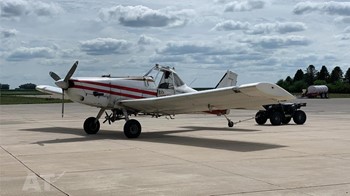
Piper Pawnee Brave Piston Agricultural Aircraft
Although modern piston ag aircraft are faster, safer, and far more technologically advanced than those of yesteryear, they perform the same basic function of delivering fertilisers and pesticides to control weeds, pests, and diseases, and adding nutrients to soil. Turbine agricultural aircraft and piston ag planes combined treat millions of acres annually throughout the world. Referred to colloquially as “crop dusters,” aerial applicators use piston-powered aircraft to treat barley, canola, cotton, oats, soybean, sorghum, wheat, and other crops.
Ag Aircraft Advantages
Piston ag aircraft are especially useful for treating remote locations and fields with rough terrain where using land-based application equipment would be difficult or even impossible. Aerial application also doesn’t compact or disrupt the soil, so in addition to their ability to treat more acres in less time, aerial applicators contribute to less runoff and higher yields.
Piston ag aircraft are built to make numerous takeoffs and landings daily and are right at home even on primitive, rougher runways. They make use of GPS, meteorological, nozzle-control, and other precision ag technologies to enhance spray accuracy, eliminate drift, and reduce overlapping. Piston ag planes can generally store hundreds of gallons of product in an onboard hopper while flying at speeds in excess of 161 km/h (100 mph) just 1.8 metres (6 feet) or so off the ground.
Agricultural Aircraft In History
Historians credit John Chaytor with the first recorded aerial ag application; Chaytor spread seed over a valley floor in Wairoa, New Zealand from a hot air balloon in 1906. Indeed, New Zealand proved pivotal in the testing and development of aerial topdressing and seed sowing following World War I and World War II, due to a surplus of military aircraft (such as the De Havilland Gypsy Moth) and trained pilots returning home. The country’s hilly terrain, which traditionally required spreading seed and fertiliser by hand, proved to be an ideal testing ground. By around 1950, New Zealand pilots were topdressing hundreds of thousands of tonnes of fertiliser annually.
Prior to that, the first crop-related application by plane occurred in 1921 in the United States under the supervision of the Ohio Department of Agriculture. A U.S. Army pilot used a modified Curtiss JN-6 “Super Jenny” to treat catalpa trees infested with moth larvae. The following year, Curtiss piston aircraft were used to treat cotton fields in southern U.S. states under attack by boll weevils.
In 1924, Huff Daland Dusters, Inc., which would later become Delta Air Lines, became the first commercial aerial application company. In the 1950s, the Ag-1 model became the first plane created specifically for agricultural aviation. Other noteworthy models through the years have included the Piper PA-18A Super Cub (the A denotes its Agriculture specialisation), the Piper PA-25 Pawnee, Grumman’s G-164 Ag-Cat, and the Cessna 188 Ag Wagon.
Find The Right Piston Agricultural Aircraft
You’ll find new and used piston agricultural aircraft for sale every day on AviationTrader.com.au from such manufacturers as Air Tractor, Cessna, Piper, and others.

 Get Financing
